


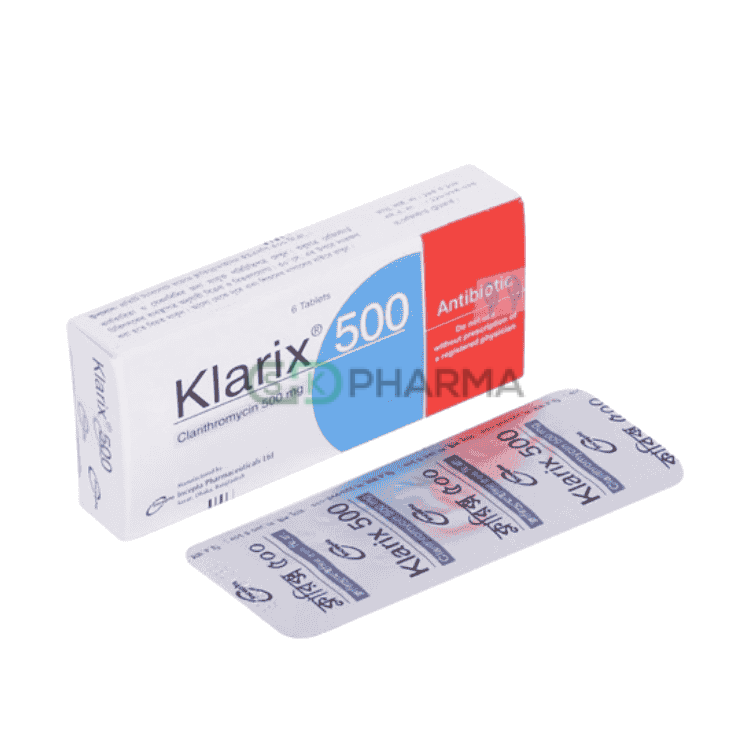
Klarix Tablet 500 mg (Clarithromycin)
-
 ৳18.80
৳20.00 -
৳3.33
৳3.50 -
৳5.64
৳6.00 -
৳8.46
৳9.00
![Recur Tablet 1 mg (Finasteride [For Androgenic Alopecia])](https://skpharma.com.bd/public/uploads/all/mqB5zpgTubYSB0CMtn0XXhQtwBc22ia6JfYbyrMt.png)


Reviews & Ratings
Klarix 500 mg contains Clarithromycin, a macrolide antibiotic widely used for the treatment of respiratory tract, skin, and soft tissue infections caused by susceptible organisms. It is also an important component of combination therapy for the eradication of Helicobacter pylori in patients with duodenal ulcers. Klarix 500 mg offers improved acid stability and tolerability compared to erythromycin, making it a reliable option for both adults and children.
রেজিস্টার্ড চিকিৎসকের পরামর্শ অনুযায়ী ঔষধ সেবন করুন
Therapeutic Class
Macrolide Antibiotics
Pharmacology
Clarithromycin acts by inhibiting bacterial protein synthesis. It binds to the 50S subunit of the bacterial ribosome, blocking translocation and thereby preventing bacterial growth. Klarix 500 mg is active against most Gram-positive organisms, Chlamydia, Mycoplasma, and some Gram-negative bacteria. It demonstrates equal or superior in-vitro activity compared to erythromycin and shows enhanced effectiveness against Haemophilus influenzae. Its improved acid stability contributes to better gastrointestinal tolerability.
Indications
Klarix 500 mg is indicated for the treatment of infections caused by susceptible microorganisms, including:
-
Streptococcal pharyngitis and tonsillitis
-
Acute and chronic sinusitis
-
Infective exacerbations of chronic bronchitis
-
Community-acquired pneumonia
-
Atypical pneumonia
-
Skin and soft tissue infections
-
Adjunct therapy for eradication of Helicobacter pylori in duodenal ulcer disease
Dosage and Administration
Adults:
-
Pharyngitis/Tonsillitis: 250 mg every 12 hours for 10 days
-
Acute maxillary sinusitis: 500 mg every 12 hours for 14 days
-
Chronic bronchitis: 250–500 mg every 12 hours for 7–14 days
-
Pneumonia: 250 mg every 12 hours for 7–14 days
-
Skin and skin structure infections: 250 mg every 12 hours for 7–14 days
-
Community-acquired upper and lower respiratory tract infections: 250–500 mg every 12 hours for 5–14 days
Children:
-
Body weight under 8 kg: 7.5 mg/kg twice daily
-
8–11 kg (1–2 years): 2.5 ml twice daily
-
12–19 kg (3–6 years): 5 ml twice daily
-
20–29 kg (7–9 years): 7.5 ml twice daily
-
30–40 kg (10–12 years): 10 ml twice daily
Klarix 500 mg may be administered with or without food.
Contraindications
-
Hypersensitivity to clarithromycin, erythromycin, or other macrolide antibiotics
-
Concomitant use with terfenadine in patients with pre-existing cardiac abnormalities or electrolyte disturbances
Drug Interactions
-
Theophylline: Concurrent use may increase serum theophylline levels
-
Terfenadine: Clarithromycin may interfere with terfenadine metabolism, increasing the risk of cardiac adverse effects
Side Effects
Klarix 500 mg is generally well tolerated. Common adverse effects may include:
-
Nausea, vomiting, diarrhoea, and abdominal pain
-
Stomatitis and glossitis
-
Headache and taste disturbances
-
Allergic reactions ranging from mild skin rashes to anaphylaxis
-
Rare central nervous system effects such as dizziness, anxiety, insomnia, and hallucinations
Pregnancy and Lactation
Clarithromycin is not recommended during pregnancy due to limited clinical experience. Breastfeeding should be discontinued during treatment, as the drug is excreted in breast milk.
Precautions and Warnings
-
Use with caution in patients with hepatic or renal impairment
-
Prolonged or repeated use may result in overgrowth of non-susceptible organisms, including fungi
-
Treatment should be discontinued if superinfection occurs
Overdose
Ingestion of large doses may cause gastrointestinal symptoms. Rare cases have reported altered mental status and electrolyte imbalance. Management includes supportive care and elimination of unabsorbed drug. Haemodialysis and peritoneal dialysis are not effective in significantly reducing serum clarithromycin levels.
Storage Conditions
Store in a cool, dry place protected from light and moisture. Reconstituted suspension should be used within 7 days at room temperature or within 14 days if refrigerated. Keep out of reach of children.
Use in Special Populations
Klarix 500 mg may be used in neonates and children at appropriate weight-adjusted doses.
Related Products
Coport Tablet 25 mg (Empagliflozin)

Coluric Tablet 0.6 mg (Colchicine)

Bumecard Tablet 1 mg (Bumetanide)
Caspogin Injection 50 mg/vial (Caspofungin Acetate)
Nestor Tablet 5 mg (Rosuvastatin Calcium)

Aristoferon Syrup 200 mg/5 ml (Ferrous Sulfate)

Citazar Tablet 250 mg (Levetiracetam)


Retigel Topical Gel 0.05% (Isotretinoin (Topical))
![Revatol Syrup (Mahadrakkharist [Grape extract])](https://skpharma.com.bd/public/uploads/all/Txyt7I3bB8hl8bymEv26DECZUMEYfabpjiiQzQkh.png)
Revatol Syrup (Mahadrakkharist [Grape extract])
Product Queries (0)
Login Or Registerto submit your questions to seller
Other Questions
No none asked to seller yet
-
৳18.80
৳20.00 -
৳3.33
৳3.50 -
৳5.64
৳6.00 -
৳8.46
৳9.00


