


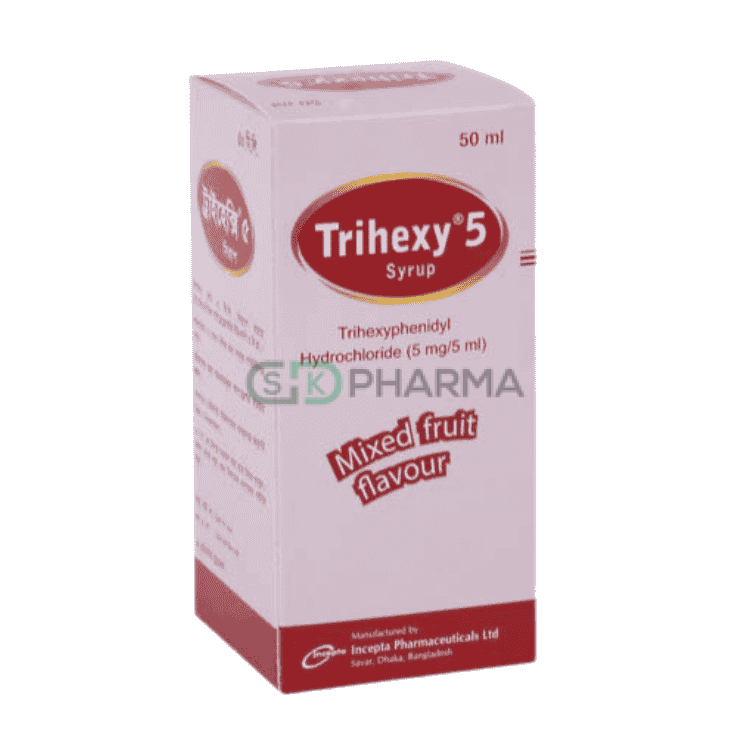
Trihexy Syrup 5 mg/5 ml (Trihexyphenidyl Hydrochloride)
-
 ৳18.80
৳20.00 -
৳3.33
৳3.50 -
৳5.64
৳6.00 -
৳8.46
৳9.00

![Recur Tablet 1 mg (Finasteride [For Androgenic Alopecia])](https://skpharma.com.bd/public/uploads/all/mqB5zpgTubYSB0CMtn0XXhQtwBc22ia6JfYbyrMt.png)

Reviews & Ratings
Indications
Trihexy Syrup 5 mg/5 ml contains Trihexyphenidyl Hydrochloride and is indicated as an adjunct therapy for the management of all forms of parkinsonism, including idiopathic, postencephalitic, and arteriosclerotic Parkinson’s disease. It is especially useful when administered alongside levodopa to improve overall symptom control.
The syrup is also effective in reducing extrapyramidal symptoms caused by certain central nervous system medications, such as phenothiazines, thioxanthenes, butyrophenones, and dibenzoxazepines.
Use of this medication should be under the supervision of a registered healthcare professional.
Description
Trihexy Syrup 5 mg/5 ml acts by suppressing parasympathetic nervous system activity. It exerts a relaxing effect on smooth muscle through both direct muscle action and indirect modulation of parasympathetic pathways, helping to reduce muscle rigidity and tremors associated with movement disorders.
রেজিস্টার্ড চিকিৎসকের পরামর্শ অনুযায়ী ঔষধ সেবন করুন
Pharmacology
Trihexyphenidyl is a non-selective muscarinic acetylcholine receptor antagonist with predominant activity at the M1 receptor subtype. It demonstrates stronger binding to central muscarinic receptors in the cerebral cortex compared to peripheral receptors. Evidence suggests that it may also influence nicotinic acetylcholine receptors, indirectly enhancing dopamine release in the striatum. Although the complete mechanism of action is not fully defined, these effects contribute to the improvement of Parkinson’s disease symptoms and drug-induced movement disorders.
Dosage & Administration
Dosage should be individualized according to patient response and tolerance, with lower starting doses recommended for elderly patients, particularly those over 60 years of age. The syrup may be taken before or after meals based on patient comfort and side-effect profile.
-
Idiopathic Parkinsonism: Start with 1 mg on the first day, increasing by 2 mg every 3–5 days until an effective daily dose of 6–10 mg is reached. Some patients may require up to 12–15 mg daily.
-
Drug-Induced Parkinsonism: Typical daily doses range from 5–15 mg, adjusted according to symptom severity. Some patients respond adequately to as little as 1 mg daily.
-
Concomitant Use with Levodopa: Dose reduction of one or both drugs may be necessary. In such cases, Trihexyphenidyl is commonly used at 3–6 mg per day in divided doses.
Drug Interactions
Concurrent use with alcohol, opioids, barbiturates, or cannabinoids may enhance sedative effects and increase the risk of misuse. Use with other CNS depressants can further intensify sedation. Medications with anticholinergic activity, including tricyclic antidepressants and monoamine oxidase inhibitors, may increase anticholinergic adverse effects when used together with Trihexyphenidyl.
Contraindications
Trihexy Syrup is contraindicated in patients with known hypersensitivity to Trihexyphenidyl or any component of the formulation. It should not be used in individuals with narrow-angle glaucoma, as prolonged use may worsen the condition and risk permanent vision loss.
রেজিস্টার্ড চিকিৎসকের পরামর্শ অনুযায়ী ঔষধ সেবন করুন
Side Effects
Common adverse effects include dry mouth, blurred vision, dizziness, mild nausea, and nervousness, occurring in a significant proportion of patients, especially during early therapy. These effects often diminish with continued use or dose adjustment.
Less common reactions include severe dryness of the mouth, skin reactions, urinary retention, constipation, drowsiness, tachycardia, cognitive impairment, and increased intraocular pressure. Rarely, psychiatric symptoms such as hallucinations or delusions may occur. Sudden discontinuation may exacerbate Parkinsonian symptoms or precipitate Neuroleptic Malignant Syndrome.
Pregnancy & Lactation
There are no adequate controlled studies in pregnant women. Trihexyphenidyl should be used during pregnancy only if the expected benefit justifies the potential risk to the fetus. It is unknown whether the drug is excreted in breast milk; therefore, caution is advised when administering to breastfeeding mothers, as it may also reduce milk production.
Precautions & Warnings
Before initiating therapy, evaluation of intraocular pressure is recommended, as Trihexyphenidyl may precipitate angle-closure glaucoma. Caution is required in elderly patients, those with CNS disorders, and individuals exposed to high temperatures or performing strenuous physical work, due to the risk of reduced sweating and hyperthermia. Dose adjustments may be necessary to maintain safe body temperature regulation.
Overdose Effects
Overdose may produce signs of anticholinergic toxicity, including dilated pupils, dry and flushed skin, fever, tachycardia, agitation, and delirium. Severe poisoning can result in coma, respiratory failure, or death. Management includes prompt symptomatic and supportive treatment, gastric lavage if appropriate, use of benzodiazepines for CNS excitation, and maintenance of hydration and respiratory function. The drug is not known to be removed by dialysis.
Therapeutic Class
Antiparkinson Drugs
Storage Conditions
Store in a dry place below 30°C, protected from light and moisture. Keep out of reach of children.
Related Products

Lubric Eye Drop 1% (Hypromellose)

Windel Tablet 4 mg (Salbutamol)

Daclin Capsule 150 mg (Clindamycin)

Daclin T Topical Gel 1.2%+0.025% (Clindamycin + Tretinoin)

Daprogen Tablet 2 mg (Daprodustat)
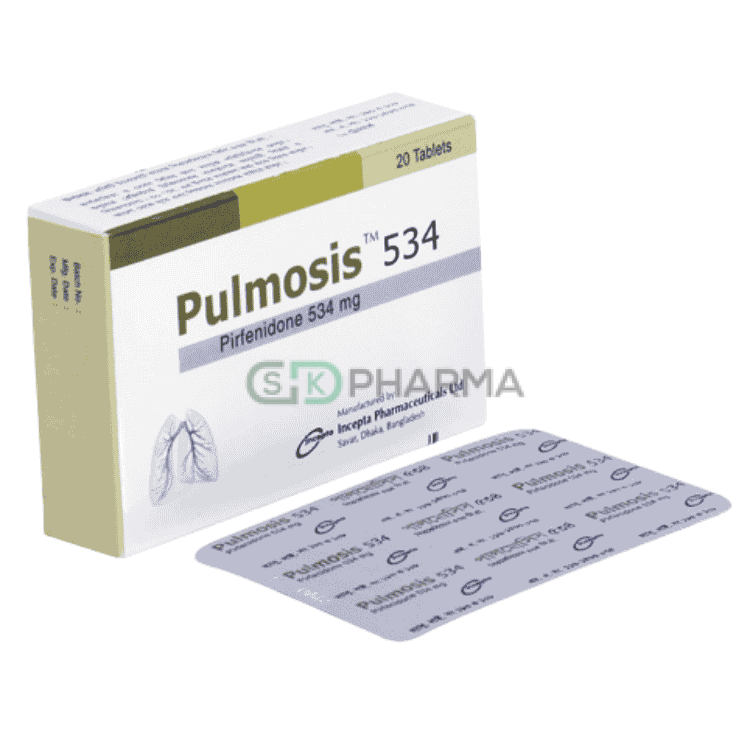
Pulmosis Tablet 534 mg (Pirfenidone)

Tergocin Injection 400 mg/vial (Teicoplanin)

Losucon Tablet 1 mg (Glimepiride)
Product Queries (0)
Login Or Registerto submit your questions to seller
Other Questions
No none asked to seller yet
-
৳18.80
৳20.00 -
৳3.33
৳3.50 -
৳5.64
৳6.00 -
৳8.46
৳9.00


