


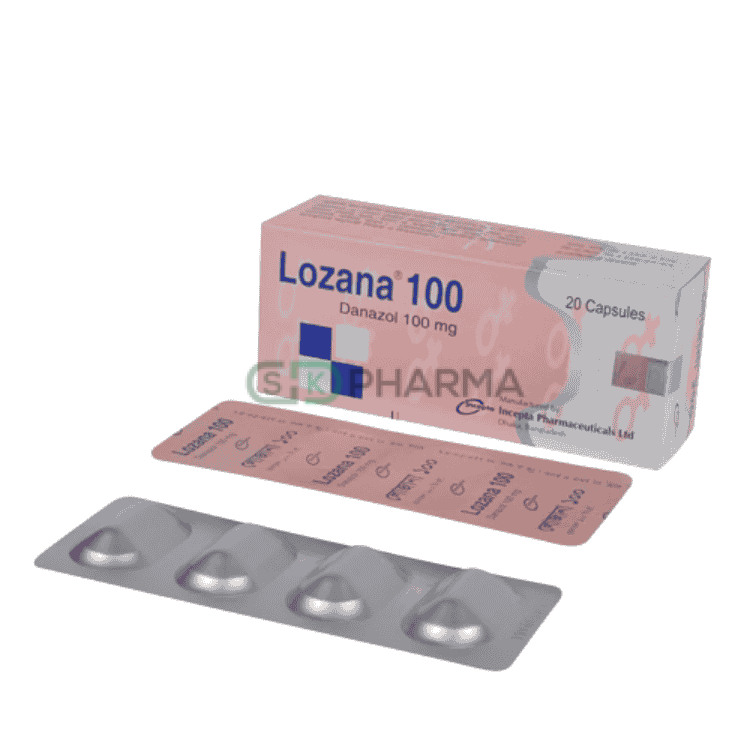
Lozana Capsule 100 mg (Danazol)
-
 ৳18.80
৳20.00 -
৳3.33
৳3.50 -
৳5.64
৳6.00 -
৳32.90
৳35.00
![Recur Tablet 1 mg (Finasteride [For Androgenic Alopecia])](https://skpharma.com.bd/public/uploads/all/mqB5zpgTubYSB0CMtn0XXhQtwBc22ia6JfYbyrMt.png)


Reviews & Ratings
Lozana 100 mg is a gonadotropin-inhibiting agent used for the treatment of various hormone-dependent conditions in both women and men. It is primarily indicated for endometriosis, benign breast disease, menorrhagia, gynecomastia, and preoperative thinning of the endometrium before hysteroscopic procedures. By modulating pituitary and ovarian hormone activity, Lozana 100 mg helps suppress excessive estrogen production and facilitates regression of hormone-sensitive tissues.
রেজিস্টার্ড চিকিৎসকের পরামর্শ অনুযায়ী ঔষধ সেবন করুন
Therapeutic Class
Drugs affecting (inhibiting) gonadotrophins
Pharmacology
Lozana 100 mg works as a gonadotropin inhibitor by suppressing the pituitary-ovarian axis. It reduces the preovulatory surge of follicle-stimulating hormone (FSH) and luteinizing hormone (LH), thereby lowering ovarian estrogen production. Additional mechanisms include:
-
Direct inhibition of ovarian steroidogenesis
-
Binding to androgen, progesterone, and glucocorticoid receptors
-
Increasing the metabolic clearance of progesterone
-
Modulation of immunoglobulin concentrations (IgG, IgM, IgA) and autoantibodies, contributing to endometriosis regression
In endometriosis, this results in atrophy of normal and ectopic endometrial tissue, anovulation, and amenorrhea. In benign breast disease, suppression of estrogen reduces nodularity and tenderness. For gynecomastia, the drug reduces estrogenic stimulation in breast tissue, relieving symptoms and possibly altering breast size. In hereditary angioedema, Lozana 100 mg increases serum levels of C1 esterase inhibitor and C4 complement, addressing the underlying biochemical deficiency.
Indications
-
Endometriosis: Symptomatic relief and tissue regression
-
Benign breast disease: Reduction of pain and nodularity
-
Menorrhagia: Regulation of excessive menstrual bleeding
-
Gynecomastia: Treatment in male adolescents and adults
-
Preoperative endometrial thinning: Before hysteroscopic endometrial ablation
Dosage and Administration
-
Endometriosis: 200–800 mg daily in 2 divided doses for 3–6 months; extendable up to 9 months if necessary
-
Benign breast disorders: 100–400 mg daily in 2 divided doses for 3–6 months
-
Gynecomastia: Male adolescents 200–400 mg daily; adult men 400 mg daily in up to 4 divided doses, typically for 6 months
-
Menorrhagia: 200 mg once daily; review after 3 months
-
Preoperative endometrial thinning: 400–800 mg daily in up to 4 divided doses for 3–6 weeks
-
Hereditary angioedema: Initially 200 mg 2–3 times daily, adjusted per response
Dosage adjustments are based on clinical response and tolerability.
Drug Interactions
-
Insulin: May increase insulin resistance; monitor glucose levels
-
Estrogens/progestogens: May interfere with hormonal contraception
-
Anticonvulsants: Can alter plasma concentrations of carbamazepine, phenytoin, or phenobarbital
-
Antihypertensives: May reduce effectiveness
-
Cyclosporine: Plasma concentrations may increase
-
Migraine therapy: Lozana may provoke migraines or reduce preventive therapy effectiveness
Contraindications
-
Pregnancy and breastfeeding (Category X)
-
Impaired hepatic, renal, or cardiac function
-
Porphyria, thromboembolic disorders, androgen-dependent tumors
-
Uninvestigated abnormal vaginal bleeding
-
Hypersensitivity to Lozana
Side Effects
Common and serious adverse effects include:
-
Fluid retention, edema, and weight gain
-
Acne, hirsutism, oily skin or hair
-
Deepening of the voice, clitoral hypertrophy
-
Amenorrhea, reduction in breast size
-
Hepatic dysfunction, elevated liver function tests
-
CNS or gastrointestinal disturbances, benign intracranial hypertension
-
Visual disturbances
Precautions and Warnings
Use cautiously in patients with epilepsy, migraine, diabetes, severe hypertension, polycythaemia, history of thrombosis, or in children. Monitor for hepatic, renal, and cardiac conditions.
Overdose
Acute overdose is unlikely to produce immediate serious effects. If ingestion occurs, gastric lavage and observation are recommended.
Storage
Store at 15–30°C, away from direct light. Keep out of reach of children.
Related Products
Sixvit Tablet 20 mg (Pyridoxine Hydrochloride)
Anulid Tablet 400 mg (Linezolid)

Carnovas Tablet 2.5 mg (Nebivolol Hydrochloride)

Odazyth Suspension 200 mg/5 ml (Azithromycin Dihydrate)

Loratin Fast Tablet 10 mg (Loratadine)

Coxpar Injection 40 mg/vial (Parecoxib)

Camiton Tablet 5 mg (Vinpocetine)
Demoxil Capsule 250 mg (Amoxicillin Trihydrate)
Product Queries (0)
Login Or Registerto submit your questions to seller
Other Questions
No none asked to seller yet
-
৳18.80
৳20.00 -
৳3.33
৳3.50 -
৳5.64
৳6.00 -
৳32.90
৳35.00


